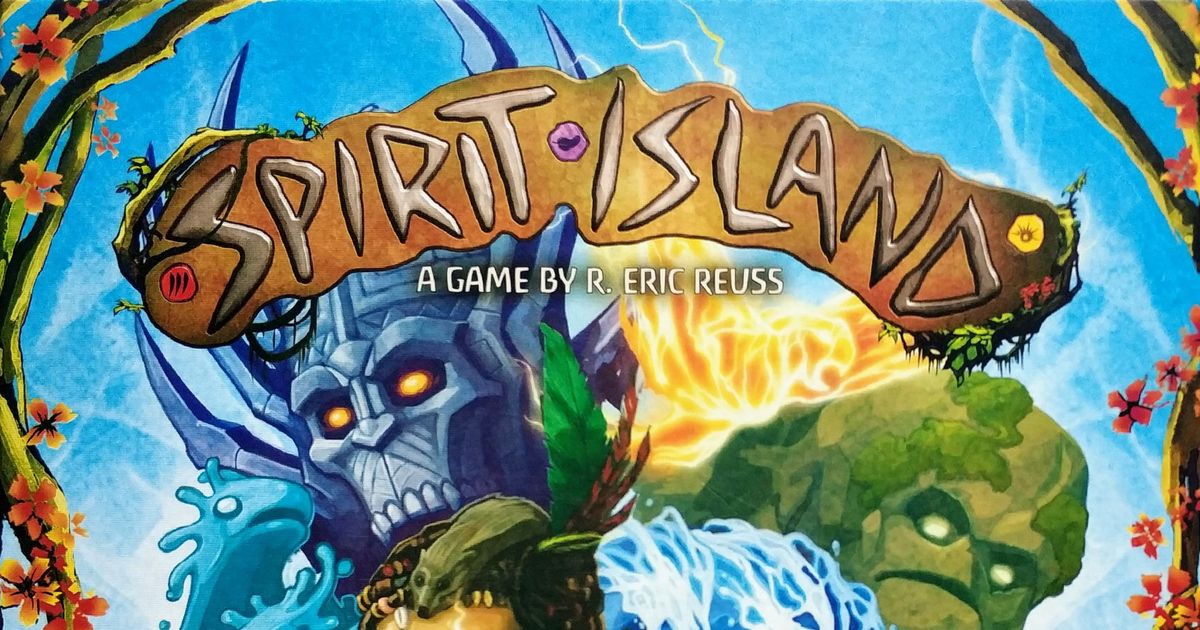
This has been in our regular rotation longer than almost anything else on this shelf, and I think the premise is a real part of why it holds up: you’re not settlers building a colony, you’re the spirits of the land itself, and the Invaders are the threat, an explicitly colonial force expanding across your island that you’re trying to push back out through a mix of environmental fear, direct destructive power, and coordination with the island’s native Dahan people. It’s a rare strategy game with something genuinely pointed to say through its structure rather than just its flavor text, and the design commits to that framing all the way through, including a real acknowledgment in the credits of the history it’s drawing from.
Mechanically, each spirit is close to its own separate game, distinct power cards, distinct growth options, distinct thresholds for what triggers their special abilities, and the combinatorics of which spirits are in play together genuinely change how a session unfolds. Marcus mains a spirit called Lightning’s Swift Strike for the aggressive, high-tempo play; I’ve settled into Vital Strength of the Earth for its slower, cumulative buildup. Playing them side by side rarely feels repetitive, even after what must be forty or fifty sessions across two years.
The learning curve is real and I won’t undersell it. A new player’s first game, even with an “easy” spirit and a low-difficulty setup, involves a genuine amount of rules lookup, and the fear and terror-level mechanics in particular took our group a couple of sessions to internalize correctly. The rulebook itself is dense but well organized, with a clear reference section we still return to for edge cases around Blight thresholds and Invader build orders.
The escalating difficulty system, adversary decks that let you dial the challenge up as your group improves, has kept this from ever feeling solved, which is the real test of a cooperative game’s longevity. Two years in, we still lose sometimes, and losing to a well-tuned adversary deck feels fair rather than unfair, which is not a small design achievement. As close to a permanent fixture in this shop’s Tuesday rotation as anything gets.