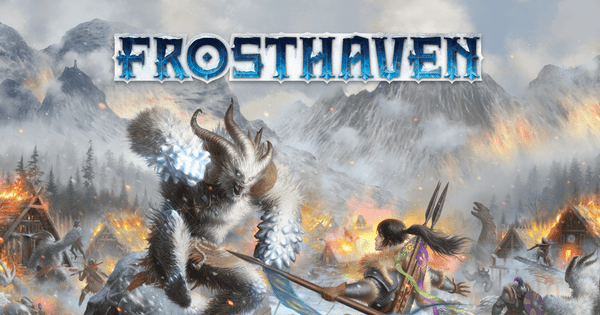
We’re eleven scenarios into our campaign as of this writing, Dana, Marcus, and I rotating a fourth seat depending on who’s free that Tuesday, and I’m comfortable saying this is a genuine improvement on Gloomhaven’s system rather than just more of it, even though “more” is also accurate. The core hand-management combat, playing two cards a turn for a top and bottom action, managing initiative through card values, is untouched and still the best version of that idea on the market. What’s new is the town-building layer between scenarios: hiring craftspeople, constructing buildings, managing a resource economy that feeds back into what your characters can build and buy.
That layer is where Frosthaven earns its reputation as a bigger commitment than its predecessor, and it’s not exaggerating. Between-scenario administration, distributing resources, deciding what to build next, running events that branch based on choices your whole group votes on, can eat as much table time as the scenario itself in the campaign’s early stretch, before the town infrastructure is built out enough to run efficiently. I won’t pretend that hasn’t tested our group’s patience on a couple of long nights.
Where the design pays that patience back is in how alive the town starts to feel by scenario ten or so. Buildings we funded early are now producing resources that make later scenarios meaningfully easier, decisions from six sessions ago are still echoing through event outcomes, and there’s a sense of a shared, evolving world that a straight dungeon-crawl structure wouldn’t produce. It’s asking for a real time investment across dozens of sessions, and it only pays that investment back if your group actually sticks with it that long.
The component and rulebook production deserves real credit. This ships with a genuinely comprehensive index, cross-referenced rule sections, and enough organizational scaffolding that a rules question mid-scenario rarely takes us more than a minute to resolve, which matters enormously for a system this mechanically dense. Not a game to start lightly. If your group has the appetite for a long campaign and the patience for its slower administrative stretches, it’s close to the best version of this genre currently on shelves.