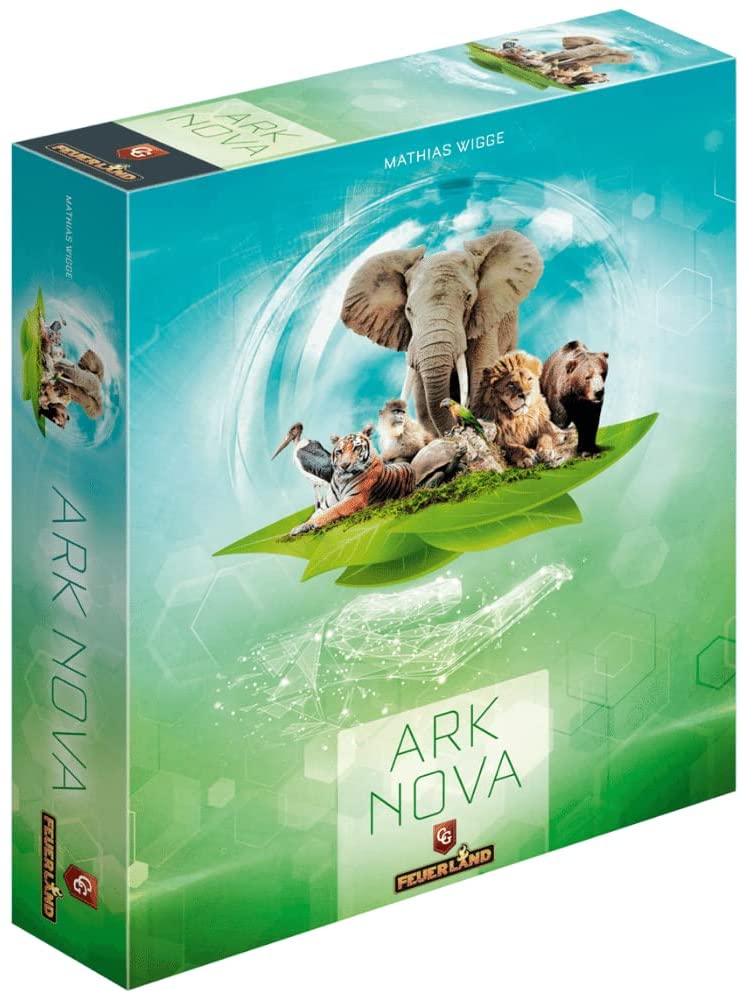
Marcus is the one who requested this after a friend of his brought it to a convention meetup, and it took us most of a first playthrough just to understand what the game was actually asking of us, since Ark Nova stacks four or five systems, animal cards, conservation projects, sponsors, association board tracks, university actions, on top of each other and expects you to be running all of them at once fairly early. That’s a lot to hold in your head. It is also, once it clicks, one of the more satisfying engine-builders I’ve played, because every system is legibly connected to every other one rather than bolted on for complexity’s sake.
The central tension, balancing your zoo’s appeal against its conservation impact, both of which score points on separate tracks that need to stay roughly matched or your final scoring collapses, is the smartest piece of the design. It’s easy to build a zoo that looks impressive on the table and scores terribly because you never funded a single conservation project, and I did exactly that in my first game and lost badly, which is a much better teaching mechanism than a rulebook paragraph would have been.
The animal card database is enormous, hundreds of unique cards with real species, real enclosure requirements, real conservation status noted in the corner text, and I found myself sorting a starter deck by continent and habitat type the same slow way I’d sort a donated reference collection, which either says something about the game’s design or something about how deep the bookstore habits run. Either way it’s not a criticism. The card variety is what keeps repeat plays from feeling identical, since the animals available each game shape an entirely different strategic path.
The one real strike against it is table space and setup time. This needs real room, individual player boards, a shared market row, an association board, and a first game with new players runs long enough that I wouldn’t bring it to a night where anyone’s watching the clock. Once everyone knows the icons it moves faster, but that first-game tax is real and worth knowing about before you commit an evening to it. Worth every minute of that tax, in my experience, but I understand why some groups bounce off it before reaching the payoff.